

New Year’s resolutions. We’ve all heard of them. Most of us have tried to make one. Some may even have a yearly tradition of doing so. But as everyone knows, the hope of these resolutions outlasting the four seasons, let alone just getting through the cold month of January, is slim.1 Now you could point to many valid reasons for this, and certainly the culture surrounding these resolutions is not helping anything, but if you strip away all of the failed gym memberships and other jokes surrounding these half-baked goals, it does seem like the concept of New Year’s resolutions is rooted in wisdom. Growth is important, and the New Year offers a great opportunity to step back, reflect on our current situation, and create plans for where we want to be. However, how we make these plans (and what informs them) is an essential ingredient that we often overlook, which is why we will be focusing on it today.
Building a Doomed Feature
An Example of Failing to Plan with the Purpose in Mind
If you are like most people, you probably would say your life is busy. Especially coming out of the holiday season, it is easy to feel like you are always doing something. And personally, many times I equate that “doing” with being productive. But as I’ve seen countless times in my life, this seeming truth is anything but.
Let me give a recent example from my own life. It’s a bit of a long one, so if you want to skip ahead to the next section, feel free, but it provides a great illustration of the waste that can come with simply doing without a proper understanding of the purpose. A few years ago I began a journey to build an app that enables you to partner with a friend and hold each other accountable for how much time you spend on your phones. There were countless turns along the way, but one pivot in particular could have been avoided with proper planning. To give some background, you should know that Apple takes your screen time data privacy very seriously. As a developer, there are strict limits on how much data we can access, and I mean very strict limits. However, my initial vision for the app I was building involved showing users how much time they had saved (or, rather, redeemed) by not being on their screens since starting to use my app. At the time, I thought this was an essential feature, so without really considering an alternative, I began to attempt to develop workarounds to Apple’s strict handling of user data.
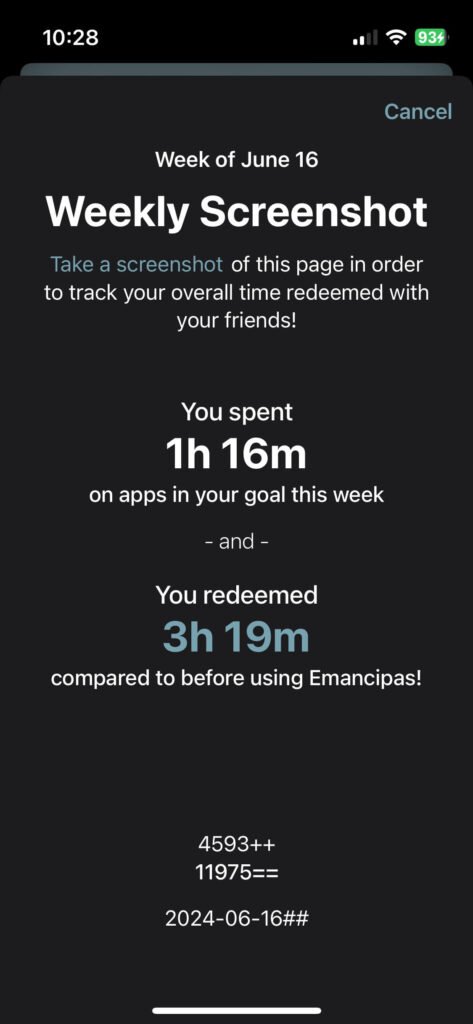
The solution I ended up landing on was having a weekly popup that showed users their screen time. I would then have users take a screenshot of this pop-up, enabling me to use image processing to strip the words and numbers off the image and store how much time a user had saved by not being on their phones. I know, it seems ridiculously complicated even just reading it. But after thinking things through, this seemed to be the best solution, one that involved the user willingly consenting to giving the data while also working with Apple’s policies. Accordingly, I got to work, spending countless hours and months developing this process, and in the end, it worked!
After finishing up some last details, I finally decided it was time to submit the app to Apple. That’s when I hit a brick wall. During the submission process, I came across a hitherto unknown step where I had to get permission to use Apple’s screen time data. And on the form to receive this permission, there was a box where I had to say whether I collected any user screen time data, regardless of whether they had consented or not, including through screenshots. I gulped, filled out the form accurately, and then proceeded to wait multiple weeks for a response. And to my dismay, it turned out my answer to that question disqualified me from receiving screen time permission.
Now I don’t blame myself for not knowing this beforehand. I had done research before beginning the coding process, and it seemed like in years past taking screen shots was an acceptable work around according to Apple. Furthermore, there was almost no information out there concerning needing this extra-permission to use Apple’s screen time framework in a public app on the App Store. But, where I was fully at fault was in how I lost sight of the mission of my app as a whole.
Upon reaching this blockade to progress, I began to rethink what features my screen time app truly needed. As previously stated, the core purpose of the app was to enable users to partner with a friend and hold each other accountable for their screen time. My motivator for creating this app in the first place was to help people find freedom through relationship, and I had built out features to accomplish this. But was knowing how much time you had saved since using my app really a necessary part of achieving this mission? Obviously, the answer is no. And after talking it over with my then fiancée (now wife), she admitted what I had worried about throughout the whole development process: needing to take a screenshot weekly was a PAIN. It may have been the biggest hindrance to my users actually enjoying and using the app. And lo and behold, there turned out to be many other better ways of engaging users with the app and showing them their progress.
Aligning Your Actions with Your Mission
So to recap that story, I spent months painfully developing a feature that was not central to my app’s purpose, prevented my app from being accepted to the App Store, and may have been extremely detrimental to my user experience. When looking back, the blunder seems obvious. As Stephen Covey described it, I was climbing a ladder that was propped up against the wrong wall.2 But how often do we find ourselves in similar, but less obvious, situations?
In his bestselling book The 7 Habits of Highly Effective People, Stephen Covey spends a full chapter describing the importance of beginning with the end in mind. As my previous example proves, he shares:
It is possible to be busy—very busy—without being very effective. […] We may be very busy, we may be very efficient, but we will also be truly effective only when we begin with the end in mind.2
Now this book is mostly directed towards individuals, but I believe the point is just as applicable to organizations of any kind. When we simply walk forward without taking the time to consider our destination, we’re on a path nearly guaranteed to disappoint. That is why Covey emphasizes the need to think things through backwards, starting from how you want to be remembered when you die, and making decisions accordingly now. Doing so brings you to your “why,” your reason for what you do. There are countless reasons both individuals and organizations should know this why. For businesses, one such reason is how inspiring a convincing answer to this “why?” question can be, creating stakeholder-wide buy-in and propelling an organization to greater heights. (As a side note, if you haven’t seen Simon Sinek’s renowned TED Talk on this subject, you may want to give it a listen. Admittedly, it became a bit of a joke how many times I had to watch it in college and even high school, but it is undeniably extremely valuable, especially for leaders.)3
But as a whole, knowing your “why” is so important because it equips you to live a life of purpose and direction, and that applies to businesses as much as to people. This is where a mission statement comes in. Your business may already have one, and you personally may already have one, but if you don’t or you are looking to revise yours, Covey provides a concise description of how to do so within The 7 Habits of Highly Effective People, and there are countless other resources you can find online to help you as well. No matter what, though, I urge you to consider your “why.” If you are a leader in your business, consider why your organization exists. If you are an employee, consider why you do the job you do, the purpose behind it. And everyone can think through their “why” for their individual lives, the reason they live. But once you have brought clarity to that “why,” to your mission, I would encourage you to make plans and decisions based on it at the beginning of this new year.
It is easy to set goals and make plans. You may want to expand your business this year and have a step-by-step plan for doing so. You may want to get your finances under control with new strategies to cut expenses and increase revenues. Or, you may even just want to lose some weight, and you bought a gym membership to prove it. But wherever you find yourself entering this new year, I want to challenge you to not only make plans, but to make plans aligned with your purpose, with your reason for existing. Only take those actions that further your mission, and live a cohesive life. Let’s not simply do things this year. Let’s truly be effective.
Reference
- Girolimon, Mars. “What Are New Year’s Resolutions and Do They Work?” Southern New Hampshire University Newsroom, 2 Jan. 2025, www.snhu.edu/about-us/newsroom/community/what-are-new-years-resolutions-and-do-they-work.
- Covey, Stephen R. The 7 Habits of Highly Effective People: Powerful Lessons in Personal Change. Simon & Schuster, 1989, pg 112.
- Sinek, Simon. How Great Leaders Inspire Action. TED, 2010, www.ted.com/talks/simon_sinek_how_great_leaders_inspire_action.